Introduction
Historically, police personnel have been largely seen as law enforcement officials tasked with upholding public order, preventing crime, and apprehending offenders. Even though these duties are still crucial, modern policing has grown to be a far more expansive and intricate profession. Officers today are expected to be problem solvers, technology users, community partners, crisis responders, and defenders of constitutional rights. ## From Law Enforcement to Community Partnership These growing demands reflect shifts in technology, public perceptions, societal circumstances, and the kinds of emergencies cops deal with.
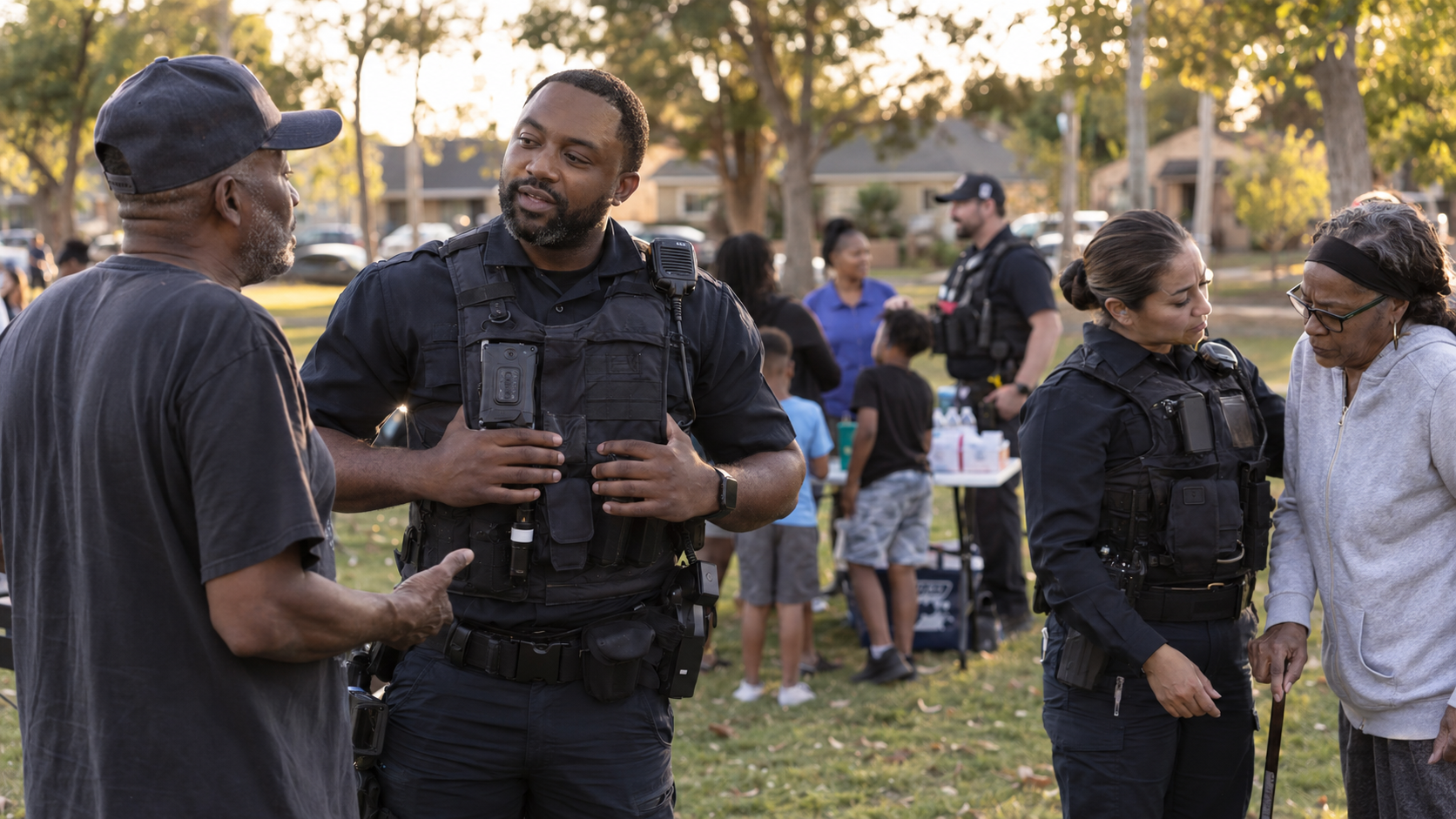
The greater focus on community involvement is one of the most significant developments in contemporary police. Law enforcement agencies are encouraged by community policing to form alliances with locals, businesses, schools, nonprofits, and religious institutions. Officers collaborate with community members to identify the factors that contribute to crime and provide long-term solutions, rather than reacting solely after crimes happen (Office of Community Oriented Policing Services, 2014).
Officers using this strategy must be able to interact with people from a variety of backgrounds and have a thorough understanding of the areas they serve. Officers can strengthen their ties with the community by working with local organizations, attending neighborhood meetings, and taking part in youth activities. Residents may be more inclined to report crimes, contribute information, and assist with investigations when they see police as reliable collaborators. Thus, a key component of successful crime prevention is community trust.
Handling Social and Mental Health Emergencies
Police are responding to more cases of mental illness, drug abuse, homelessness, family disputes, and other social issues. Officers are frequently the initial point of contact for people experiencing mental health problems in their communities. Instead of making an arrest right away, these circumstances can call for patience, conversation, de-escalation, and awareness of the therapeutic options.
Law enforcement agencies and mental health specialists, hospitals, treatment facilities, and community organizations can be connected through police-mental health cooperation. In many jurisdictions, officers and behavioral health specialists respond jointly through crisis-intervention teams or co-responder programs (Bureau of Justice Assistance, n.d.). These collaborations might give people alternatives to jail time while freeing up police to concentrate on major crimes and dangers to public safety. However, a well-supported mental health system should not be replaced by police. ## Technology, Data, and Accountability They should play a part in a coordinated community response.
Police officers’ daily tasks have also changed because of technology. Drones, digital evidence systems, automatic license plate scanners, body-worn cameras, crime mapping programs, and data analysis tools can all help with investigations and enhance operational awareness. Officers now need to know how to gather, store, and present digital evidence while adhering to departmental guidelines and constitutional rights.
Body-worn cameras can record interactions, aid investigations, and offer proof in court. However, studies show that their impacts might differ according to supervision, officer compliance, agency policies, and the conditions under which cameras are employed (National Institute of Justice, 2022). Technology cannot establish public trust or accountability on its own. Clear regulations pertaining to privacy, data storage, public access, facial recognition, artificial intelligence, and the proper use of surveillance techniques must be established by agencies.
Upholding Rights and Establishing Credibility
Contemporary law enforcement officials are expected to uphold both public safety and individual rights. Strong knowledge of due process, search and seizure laws, constitutional law, cultural sensitivity, and moral judgment are all necessary for this. Officers frequently must make quick choices, but they must always be legal, reasonable, and in line with professional standards.
Police legitimacy is particularly dependent on procedural justice. When police allow people to speak, treat them with dignity, make choices fairly, and provide clear explanations for their actions, people are more likely to see police activities as legitimate (National Institute of Justice, n.d.).
Officer Wellness and Continuing Education
The evolving role of police officers necessitates that agencies give employee wellness top priority, even in situations where an officer must issue a citation, make an arrest, or exercise lawful authority. Long shifts, organizational pressure, public criticism, traumatic situations, and threats to their personal safety are all commonplace for officers. Anxiety, depression, post-traumatic stress disorder, and suicidal thoughts have all been linked to occupational stress in first responders, highlighting the significance of peer support groups and private mental health services (Centers for Disease Control and Prevention, National Institute for Occupational Safety and Health [NIOSH], 2021).
Ongoing education is also crucial. Regular training in de-escalation, crisis response, technology, law updates, communication, leadership, ethics, and cultural sensitivity is necessary for officers. Training shouldn’t be viewed as a one-time academy prerequisite. Professional development enables officers to make well-informed decisions and successfully address emerging difficulties as laws, technology, and community expectations change.
In Conclusion
Today’s police officers do more than just enforce the law. Officers are supposed to be crisis responders, technological experts, community collaborators, moral decision makers, and defenders of constitutional rights. These duties put a lot of pressure on law enforcement, but they also give them the chance to increase community trust and public safety.
The ability of agencies to successfully strike a balance between authority and accountability, enforcement and prevention, and technology and individual rights will determine the future of policing. Officers are unable to solve every social issue on their own. Law enforcement, locals, mental health specialists, educators, service providers, and other community partners must work together to provide effective public safety. Police departments may better prepare officers for their evolving roles in society by investing in training, transparency, wellness, and meaningful community ties.
References
Bureau of Justice Assistance. (n.d.). Police-mental health collaboration toolkit. U.S. Department of Justice, Office of Justice Programs.
Centers for Disease Control and Prevention, National Institute for Occupational Safety and Health. (2021, April 6). Suicides among first responders: A call to action.
National Institute of Justice. (n.d.). Procedural justice. U.S. Department of Justice, Office of Justice Programs.
National Institute of Justice. (2022). Body-worn cameras: What the evidence tells us. U.S. Department of Justice, Office of Justice Programs.
Office of Community Oriented Policing Services. (2014). Community policing defined. U.S. Department of Justice.
Recommended Resources