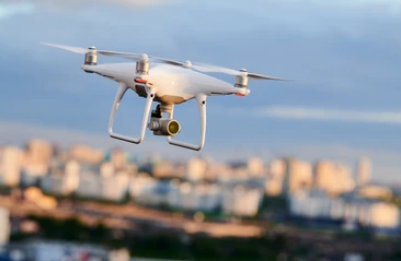
Drones’ Expanding Use in Law Enforcement
Unmanned aircraft systems, or drones, have grown in importance as a tool for law enforcement as technology continues to revolutionize the field. Officers can use drones to get an aerial view without putting staff members in potentially hazardous situations right away. They can be used by agencies in traffic incidents, crime-scene recording, disaster response, search and rescue operations, missing-person inquiries, and some tactical scenarios. Drones can give cops fast information that enhances situational awareness and supports decision-making when they are used appropriately.
Increasing Officer and Community Safety
Increased safety is one of the biggest potential advantages of drones. Officers may typically need to physically approach a location during a violent occurrence to identify potential threats. Officers can assess a scene before determining how to respond by using a drone to offer visual information from a safer distance. Additionally, drones can help emergency responders explore big or challenging regions for suspects, injured people, missing children, or vulnerable elders. Although this technology can give cops information to assist them make safer and more educated judgments, it shouldn’t take the role of qualified officers.
Privacy and Constitutional Issues
Despite its advantages, police drones give rise to serious privacy, surveillance, and constitutional rights issues. The capacity to view regions from the air raises significant issues about when surveillance turns into a search and if a warrant is necessary. Even when an agency thinks its operations are legal, extensive or prolonged aerial surveillance might also raise public concerns. Therefore, law enforcement organizations should create explicit policies that specify when drones can be used, what data can be gathered, how long recordings can be kept, who can access the data, and when a judge’s approval is required. Constitutional protections should never be replaced by technological competence.
Accountability and Community Trust
When authorities launch drone programs, transparency is crucial. Communities should be aware of the reasons for the usage of drones by local police department as well as the situations in which they might be used. Accountability can be strengthened by written policies, supervisory approval, operator training, deployment records, data-retention regulations, and recurring audits. Community members should be informed by agencies about the advantages and drawbacks of the technology. Residents can see drones primarily as surveillance tools if there is a lack of transparency. Agencies have a higher chance of proving that drones are being utilized for legitimate public safety purposes rather than unlimited monitoring if they have the right procedures and controls.
The Future of Drones in Law Enforcement
As technology advances, drones will probably continue to be used in law enforcement. Their capacity to deliver information fast while lowering needless dangers to law enforcement and the public may be their greatest asset. Innovation must, however, be tempered with community expectations, accountability, privacy, and constitutional rights. The main concern should be when, why, and under what safeguards it should be used rather than just whether law enforcement can employ a specific technology. Drones can be a useful public-safety tool while maintaining the community confidence necessary for efficient police when agencies set strong policies, offer suitable training, uphold transparency, and respect individual rights.
Recommended Resources