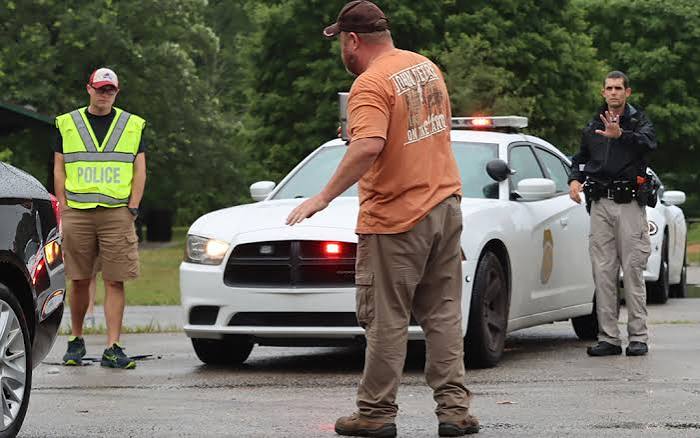
Split Second Decisions
Law enforcement personnel frequently must make difficult choices in unpredictable, stressful, and quickly evolving circumstances. Officers may only have a few seconds to assess the situation and choose the best course of action when responding to traffic stops, suspicious-person reports, behavioral health emergencies, domestic disturbances, and other situations. De-escalation training has grown to be a crucial part of modern law enforcement since it gives officers extra tactics for handling situations when they arise. Concepts including communication, tactical repositioning, distance, cover, and slowing down situations when it is safe and appropriate to do so have been highlighted by the Police Executive Research Forum (PERF, 2016). An officer’s need to react to an urgent threat is not eliminated by de-escalation. Instead, it broadens the options available to cops before using force.
Training
Officers must evaluate both behavior and conditions to de-escalate situations effectively. Active listening, clear and calm communication, establishing distance, asking for more resources, avoiding needless conflict, and identifying when someone might be going through a behavioral or mental health crisis are some strategies. The U.S. Department of Justice (DOJ, 2023) states that de-escalation training can cover tactical considerations, crisis awareness, communication skills, and strategies meant to minimize the use of force where practical. Because police officers often deal with people who are suffering fear, bewilderment, rage, substance-related impairment, or psychological distress, these skills are very important. An officer may be able to alter the response while still taking the necessary safety procedures if they are aware of these circumstances.
De-escalate
Officer decision-making and de-escalation are strongly related. When they first arrive at a situation, police officers hardly ever have all the information. They need to constantly assess people’s behavior, the surroundings, the resources at hand, possible dangers, and everyone’s safety. De-escalation training may improve police contacts, according to research. For instance, Engel et al. (2022) looked at how de-escalation training was implemented in a big police department and discovered evidence of decreased use-of-force events and injuries. These results show that de-escalation should be seen as a framework for decision-making that can give cops more tactical options rather than as passive policing. Officers may be able to obtain information, communicate more effectively, ask for expert assistance, or find other ways to resolve the situation if there isn’t an urgent threat that calls for intervention.
Additionally, training needs to go beyond an annual classroom presentation or a single academy course. Officers can be put in realistic situations through scenario-based training, which forces them to choose when de-escalation is appropriate and when a more rapid response is necessary. De-escalation is a crucial factor when officers can legitimately use such tactics without jeopardizing safety, according to the National Consensus Policy and Discussion Paper on Use of Force (International Association of Chiefs of Police, 2020). Through incident reviews, mentoring, and conversations regarding tactical decision-making, supervisors also play a crucial role in reiterating these concepts. Officers should be encouraged by agencies to consider whether other options could have resulted in a safe and efficient solution in addition to whether an action was legally permissible.
In Summary
De-escalation training should not be viewed as a guaranty that every police contact may be settled amicably, but rather as one component of professional officer decision-making. Officers may have little or no opportunity to use extended conversation or other de-escalation techniques in certain situations because they develop so quickly. Officers with good communication, tactical, and decision-making skills, however, may have more alternatives for settling incidents while safeguarding both themselves and the public when time and circumstances allow. Agencies can identify the most successful strategies by continuing to invest in evaluation, realistic scenarios, supervisory reinforcement, and evidence-based training. De-escalation training is still a crucial component of equipping police to make fair decisions while balancing public safety, individual rights, community trust, and officer safety as policing develops.
References
Engel, R. S., McManus, H. D., & Isaza, G. T. (2022). Moving beyond “best practice”: Experiences in police reform and a call for evidence to reduce officer-involved shootings. The ANNALS of the American Academy of Political and Social Science, 687(1), 146–165.
International Association of Chiefs of Police. (2020). National consensus policy and discussion paper on use of force. International Association of Chiefs of Police.
Police Executive Research Forum. (2016). Guiding principles on use of force. Police Executive Research Forum.
U.S. Department of Justice. (2023). De-escalation training resources. Office of Community Oriented Policing Services.
Photo Credit: Mikey Galo, News21
Recommended Resources