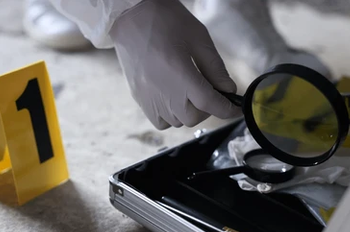
Securing the Scene
Failing to create and maintain a secure perimeter is one of the most serious errors in a crime-scene investigation. Unauthorized entry can disrupt evidence, add new material, and make it challenging to identify what was there in the first place. Investigators also need to think about whether pertinent evidence is found in places other than the most evident. Setting up suitable boundaries, keeping track of who comes and goes, and managing access all aid in maintaining the scene while enabling emergency personnel to carry out necessary tasks.
Inadequate Documentation
Detailed documentation is crucial because the crime scene evolves as investigators investigate it. Important questions may remain unanswered due to missing photos, insufficient notes, and ambiguous descriptions. The state of the site, the position of the evidence, and any modifications brought about by emergency response or investigative work should all be recorded by investigators. Photographs, measurements, sketches, and written observations should all work together to create a comprehensive record that may be reviewed by others long after the scene has been made public.
Improper Evidence Handling
When evidence is improperly gathered, handled, labeled, or preserved, it might lose its investigative value. Later analysis may be jeopardized by using contaminated equipment, combining things that should be kept apart, or selecting inappropriate packing. Leaving holes in the chain of custody—the documentation of who owned or transferred an item—is another error. Reliable testing is supported by adhering to defined collecting protocols and recording each transfer, which also helps prove that the evidence being provided is the original evidence.
Allowing Assumptions to Drive the Investigation
When investigators adopt an explanation too quickly and take every observation to support it, they run the risk of making grave mistakes. This inclination, which is frequently referred to as confirmation bias, can result in information being disregarded and other hypotheses not being sufficiently taken into account. It is important to evaluate laboratory results, physical observations, and witness testimony closely, particularly any evidence that contradicts the original idea. Investigators can reach evidence-based findings by keeping an open mind, consulting relevant experts, and examining unresolved inconsistencies.
Recommended Resources